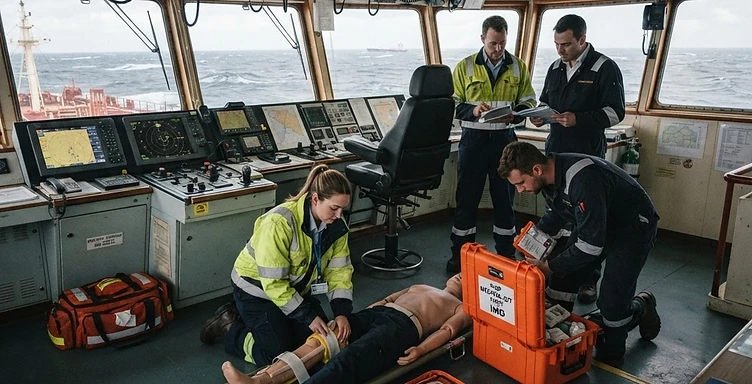
Mastering maritime medical response is critical for seafarers. Learn essential protocols for casualty management at sea to ensure safety and compliance.
Introduction to Maritime Medical Preparedness
Operating in the middle of the ocean presents a unique set of challenges. Unlike terrestrial environments where help is minutes away, a vessel at sea is often hours, if not days, from the nearest advanced medical facility. For the maritime professional, being the first responder is not just a job requirement; it is a moral and legal imperative. At Maritime Expert Solutions, we believe that effective medical first aid is the backbone of safe vessel operations.
The Golden Hour at Sea
The concept of the 'Golden Hour' refers to the critical period following a traumatic injury where rapid intervention significantly improves the probability of survival. Onboard a ship, this time window is frequently occupied by coordination and communication. As a first responder, your priority is to stabilize the patient, prevent further deterioration, and prepare for potential medevac procedures. Always remember the primary survey protocol: Danger, Response, Airway, Breathing, and Circulation (DRABC). Assessing the safety of the environment is the first step—never become a second casualty by rushing into a hazardous area.
Essential Casualty Management Protocols
When an injury occurs, clear communication and organized action are paramount. Here are the key pillars of maritime casualty management:
1. Scene Assessment and Safety
Before approaching a casualty, check for environmental hazards. Is there an electrical leak, chemical exposure, or risk of falling? Ensure your own safety so you can remain effective throughout the rescue process.
2. Triage and Prioritization
In mass casualty situations, triage is essential. Using the START (Simple Triage and Rapid Treatment) method, you can categorize patients by the severity of their injuries. This ensures that those in immediate, life-threatening conditions receive care first.
3. Basic Life Support (BLS)
Standard BLS techniques, including CPR and the use of an Automated External Defibrillator (AED), must be practiced regularly. Every seafarer should be familiar with the location and operation of the ship's AED and medical emergency response kit.
4. Hemorrhage Control
Severe bleeding is a leading cause of preventable death at sea. Proficiency in the application of tourniquets and pressure dressings is vital. Ensure that medical kits are stocked with high-quality gauze, pressure bandages, and, where appropriate, commercial tourniquets.
Communication: The Lifeline to Shore
Once the patient is stabilized, the next step is seeking external medical advice. This is where your GMDSS training and ship-to-shore communication protocols become critical. When contacting a Telemedical Assistance Service (TMAS), provide clear, concise, and structured information:
- The patient’s age, gender, and relevant medical history.
- The mechanism of injury or onset of illness.
- Current vital signs (heart rate, respiration, blood pressure, temperature).
- Treatment already administered.
- The ship’s current position and nearest port of refuge.
Maintaining STCW Compliance and Beyond
Compliance is about more than just checking boxes. STCW standards exist to ensure that every crew member contributes to a safe environment. Periodic drills—specifically focusing on medical emergencies like burns, fractures, or heart attacks—keep skills sharp and reduce panic during real-world crises. At Maritime Expert Solutions, we emphasize that medical training should be a continuous process, not a once-in-five-years event.
Conclusion: Your Role as a Responder
Effective casualty management at sea requires confidence, technical knowledge, and the ability to stay calm under pressure. By integrating regular drills into your ship's operations and maintaining a focus on mental and physical readiness, you ensure that your crew is prepared for the unexpected. Remember, in the maritime world, the crew is the first and often only line of defense. Stay trained, stay prepared, and keep safety as your primary heading.
Looking for comprehensive, STCW-compliant training? Explore our library of courses at Maritime Expert Solutions to sharpen your maritime skills today.


 Translate
