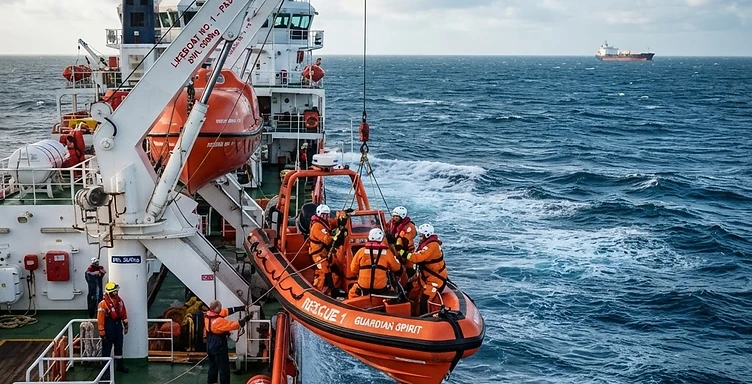
Ensure fleet safety and compliance with our guide on lifeboat operations and maintenance. Learn essential protocols for effective emergency response and equipment reliability.
Introduction: The Critical Role of Life-Saving Appliances
In the maritime industry, the lifeboat is the ultimate last line of defense. When a vessel encounters a catastrophic failure, fire, or grounding, the proficiency of the crew in launching survival craft becomes the deciding factor between a successful evacuation and a tragedy. At Maritime Expert Solutions, we believe that lifeboat competency is not merely a box-ticking exercise for STCW compliance; it is a foundational skill that every professional mariner must possess.
The Anatomy of an Emergency: Operational Proficiency
Lifeboat operations are governed by stringent SOLAS regulations, yet regulations are only effective when translated into muscle memory. Crew members must be intimately familiar with the specific model of davits, release mechanisms, and engine start-up sequences installed on their vessel.
Pre-Departure Checks and Drills
Operational readiness begins long before an emergency occurs. Conducting regular drills is non-negotiable. During these drills, focus on:
- Release Gear Familiarization: Modern lifeboats utilize On-Load release hooks. Understanding the hydrostatic interlock and the weight-sensing mechanism is vital to prevent premature release or accidental dropping of the boat.
- Engine Warm-up: Ensure the lifeboat engine is tested weekly. A cold-start failure during an abandonment drill is a red flag for maintenance teams and a significant safety risk.
- Communication Checks: Verify that handheld VHF radios, pyrotechnics, and emergency lights are functional and within their expiration dates.
Maintenance: Keeping the Fleet Ready
Equipment failure is often the result of deferred maintenance or a lack of understanding regarding environmental degradation. Saltwater and humidity are the natural enemies of survival craft.
Preventive Maintenance Protocols
Maintenance should be viewed through a structured lens, adhering to the vessel’s Planned Maintenance System (PMS):
- Hull and Integrity: Inspect the GRP hull for hairline fractures or osmotic blistering. Ensure the bowsing tackles and tricing pendants are free from corrosion and kinks.
- Release Systems: These mechanisms must be meticulously lubricated. Follow the manufacturer’s guidelines strictly. If the release cable is stiff, do not simply force it—inspect the conduit for internal salt crystallization.
- Launching Appliances: The davit system is the primary mechanical link to safety. Inspect wire ropes for signs of internal corrosion, bird-caging, or broken strands. Apply recommended lubricants to prevent the wire from 'locking' during deployment.
Challenges in Modern Maritime Operations
One of the most persistent issues in lifeboat maintenance is the human tendency to 'over-protect' the mechanism, leading to a build-up of excess grease that traps debris and moisture. Always clean old grease before applying new layers. Furthermore, the transition between different vessel types—from container ships with gravity davits to tankers with free-fall lifeboats—requires specific training. Never assume that knowledge from one vessel type is directly transferable to another without careful review of the vessel-specific manuals.
The Human Element: Safety Culture
Beyond the nuts and bolts, lifeboat operations are a matter of human factors. High-stress environments lead to cognitive tunnel vision. Regular training builds the 'Safety Mindset' necessary to remain calm. During drills, designate roles clearly: who is the Coxswain, who is the radio operator, and who is responsible for the release pins?
Practical Training at Maritime Expert Solutions
At Maritime Expert Solutions, our STCW-compliant training modules provide a simulated environment to practice these critical steps without the risk of an actual accident. Whether it is understanding the nuances of the fall-wire replacement or practicing the correct procedure for a 'drop test,' our interactive courses bridge the gap between theoretical knowledge and field application.
Conclusion: Vigilance is the Key
Maintaining lifeboats and rescue boats is an ongoing commitment to the safety of your fellow crew members. It requires a blend of mechanical aptitude, strict adherence to SOLAS guidelines, and a disciplined approach to maintenance schedules. By treating every drill with the gravity of a real emergency and every maintenance task as a life-saving action, you ensure that when the alarm sounds, the equipment—and the crew—will be ready.
Remember, in the maritime world, the time to learn how to operate your lifeboat is not while the ship is sinking. Master your equipment today to secure your safety tomorrow.


 Translate
